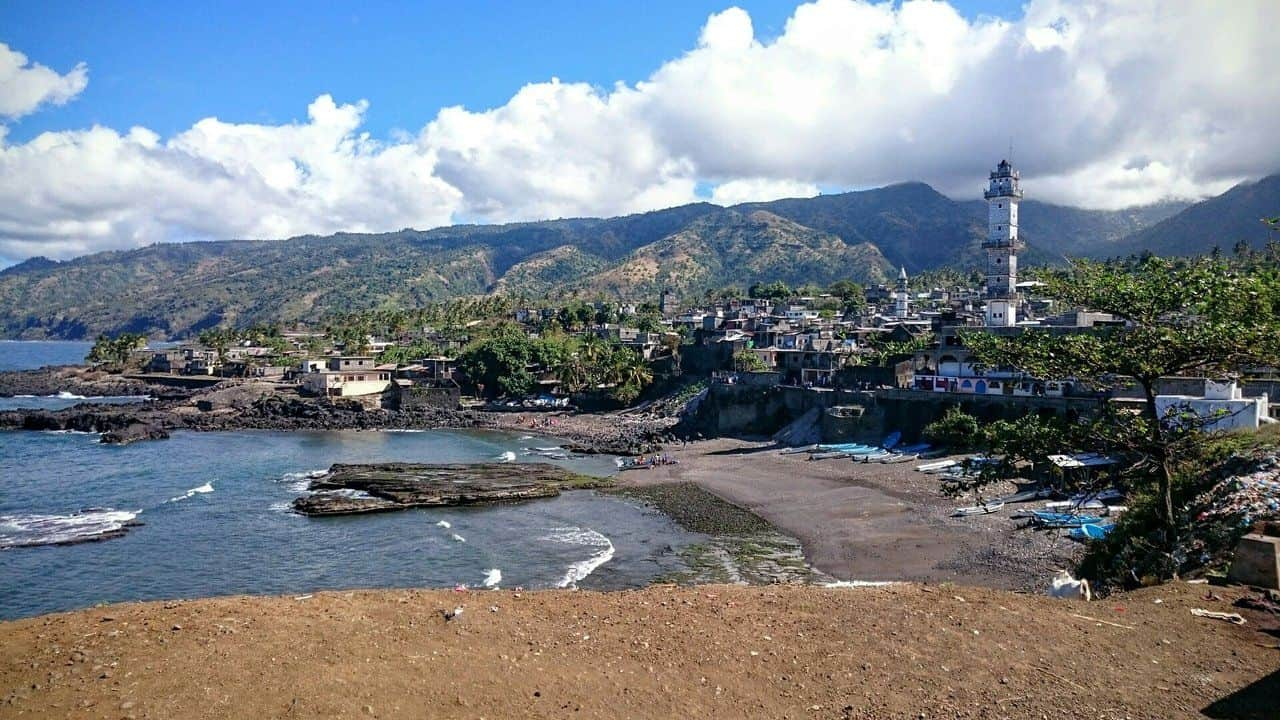
Anjouan crypto licenses are issued by the Anjouan Offshore Finance Authority (AOFA), an island-level body, but their legal standing is disputed. The Central Bank of the Comoros, the Union's financial regulator, has listed AOFA among "fictitious structures" claiming to license financial institutions. An Anjouan license also gives no right to serve clients in the EU, the UK, the US or other countries with their own crypto rules.
At a glance (checked October 2026)
| Who issues the license | Anjouan Offshore Finance Authority (AOFA), on the island of Anjouan |
| National financial regulator | Central Bank of the Comoros (BCC), which does not recognise AOFA |
| Status | Disputed between the island and the Union of the Comoros, and unresolved |
| On the BCC list of authorised intermediaries | No: neither AOFA nor any firm it licensed |
| Company | Usually an International Business Company (IBC) |
| Term | One year, renewed annually |
| Fees | Reported in a May 2026 law-firm guide as €1,000 to apply and €17,000 a year |
| Access to EU, UK and US clients | None |
| Tax | Tax may be due where the business is managed or where its clients are |
What each side has said
| When | Who | What they said |
|---|---|---|
| June 2022 | Central Bank of the Comoros | A communiqué warned of "fictitious structures claiming to issue licenses to banks and financial institutions" and named AOFA among them |
| December 2025 | Comoros Ministry of Finance | Republished the Central Bank's communiqué as a reminder |
| October 2026 | Union of the Comoros government | Asked the UK for help investigating what it calls an unauthorised offshore gambling-licensing network, and said it is preparing legal action |
| October 2026 | Anjouan Gaming, the gaming regulator under AOFA | Says its licenses are valid and cites an independent legal opinion, which it has not published |
A July 2026 academic review describes AOFA licenses as contested. The island and the Union each rely on their own legal framework, and the dispute has never been resolved. The Union's position is that financial licensing falls under Union law (Organic Law No. 05-003/AU and Banking Law No. 13-003/AU) and the Central Bank.
The October 2026 steps concern gaming licenses; press reports say nearly 1,500 businesses on Anjouan's register are affected. The Central Bank's warning concerns AOFA itself, the body that issues Anjouan crypto licenses. AOFA did not reply to questions from the trade press about the warning in March 2026.
What this means for your business
- No access to regulated markets. EU crypto services need a MiCA authorisation, and all national grandfathering periods ended by 1 July 2026. The UK, the US and many other markets also require their own authorisation or registration. See ESMA's MiCA page.
- Banking and partners. International banks and payment processors often refuse to onboard AOFA-licensed businesses, trade press reported in March 2026.
- Legal risk. The Union government's planned legal action concerns gaming licenses. We cannot predict whether it will extend to other AOFA licenses.
- Tax. Anjouan IBCs are generally marketed as exempt from local taxes on foreign-source income. Tax may still be due where you manage the business or where your clients are.
If you still consider Anjouan
These points come from current market practice and 2026 law-firm guides, not from an official AOFA rulebook:
- You apply through an IBC.
- The license runs for one year and is renewed every year.
- Applicants are not usually asked to show a fixed minimum capital or a local office. Confirm the position with AOFA before you apply.
- Reported fees are €1,000 to apply and €17,000 a year.
If your clients are in the EU, the UK or the US, an Anjouan license cannot give you access to them.
Options with a recognised regulator
| Route | Regulator | Key facts (October 2026) |
|---|---|---|
| EU license under MiCA | A national regulator, such as CySEC in Cyprus or BaFin in Germany | Capital of €50,000, €125,000 or €150,000. Passport to all EU countries |
| Dubai | VARA | AED 40,000–100,000 per activity to apply and AED 80,000–200,000 a year. Two-stage review |
| El Salvador | CNAD | Registration through a Salvadoran company or branch. A compliance officer who lives in El Salvador |
How Bergers Legal helps
- We check where your clients are and which license they legally require.
- We explain the Anjouan dispute and what it means for banking before you spend money.
- If a recognised license fits better, we compare MiCA, VARA and other routes by capital, staff and timeline.
Ready to start? Tell us about your project, or compare other crypto license countries.